Cloudflare Workflows Guide: Serverless Fault-Tolerant Pipeline Built on Durable Objects
Cloudflare Workflows Practical Guide: Timeout-Free Serverless Pipelines
Traditional serverless environments (AWS Lambda, Cloudflare Workers) have historically struggled with short execution timeouts and lack of persistent state. Executing multi-step workloads—such as external API integrations, batch media processing, or AI text/image workflows—often required gluing together queues, external databases, and cron triggers.
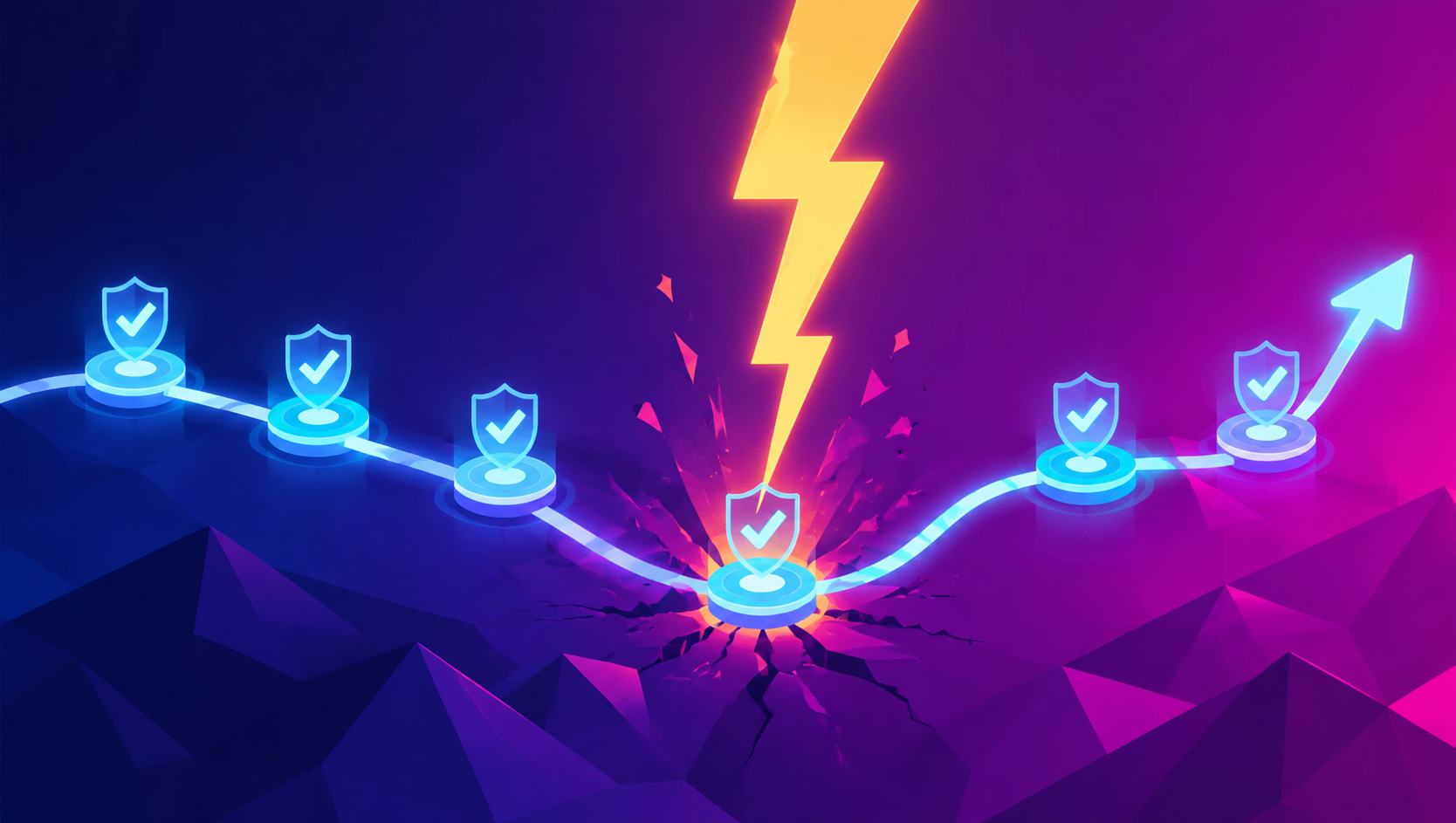
Cloudflare Workflows solves this by offering a native durable execution engine powered by Durable Objects. Even if an intermediate step fails or an edge node restarts, previously completed steps remain checkpointed in persistent storage, ensuring retries resume exactly where the failure occurred.
This guide explores the underlying architecture of Cloudflare Workflows, practical usage of step.do and step.sleep, and a production AI content generation pipeline.
1. Traditional Serverless vs Cloudflare Workflows
| Aspect / Metric | Traditional Workers / Lambda | Cloudflare Workflows (Durable Execution) |
|---|---|---|
| Max Execution Time | Limited (30s default) | Unlimited (Wait days via step.sleep) |
| Failure Retries | Entire function reruns (risk of duplicate side-effects) | Automatic exponential retries for failed steps only |
| State Persistence | Manual serialization to Redis/D1 | Automated checkpointing per step via Durable Objects |
| Cost Model | Billed during idle sleep time | $0 CPU cost during step.sleep |
2. Workflows Programming Model
Cloudflare Workflows are declared as TypeScript classes extending WorkflowEntrypoint.
3 Fundamental Building Blocks
step.do(name, config, callback): The primitive execution unit. Upon success, its return value is checkpointed to Durable Storage.step.sleep(name, duration): Pauses execution for a specified duration (seconds, hours, days) without incurring CPU billing.step.sleepUntil(name, timestamp): Suspends execution until a precise UTC timestamp.
3. Production Example: AI Pipeline with Automatic Retries
Here is a complete workflow handling AI processing, exponential backoff retries on external webhooks, non-blocking sleep, and final notification:
import { WorkflowEntrypoint, WorkflowEvent, WorkflowStep } from 'cloudflare:workers';

type Env = {
  AI: any;
  MY_WORKFLOW: Workflow;
};

type Params = {
  articleId: string;
  userEmail: string;
  rawText: string;
};

export class ArticleSummaryWorkflow extends WorkflowEntrypoint<Env, Params> {
  async run(event: WorkflowEvent<Params>, step: WorkflowStep) {
    const { articleId, userEmail, rawText } = event.payload;

    // Step 1: AI Summary Generation (Checkpointed)
    const summary = await step.do('generate-summary', async () => {
      const aiResponse = await this.env.AI.run('@cf/meta/llama-3.3-70b-instruct-fp8-fast', {
        prompt: `Summarize this text in 3 bullet points: ${rawText}`,
      });
      return aiResponse.summary;
    });

    // Step 2: Webhook Dispatch with Exponential Backoff Retries
    const webhookResult = await step.do(
      'send-webhook',
      {
        retries: {
          limit: 3,
          delay: '5 seconds',
          backoff: 'exponential',
        },
        timeout: '10 seconds',
      },
      async () => {
        const res = await fetch('https://api.example.com/webhooks/summary', {
          method: 'POST',
          headers: { 'Content-Type': 'application/json' },
          body: JSON.stringify({ articleId, summary }),
        });
        if (!res.ok) throw new Error(`HTTP Error: ${res.status}`);
        return await res.json();
      }
    );

    // Step 3: Non-blocking Sleep ($0 CPU charge)
    await step.sleep('wait-before-email', '10 seconds');

    // Step 4: Final Email Dispatch
    await step.do('send-email', async () => {
      console.log(`Email dispatched to [${userEmail}]: ${summary}`);
      return { status: 'sent', sentAt: new Date().toISOString() };
    });
  }
}
Wrangler Config (wrangler.jsonc)
{
  "name": "my-durable-pipeline",
  "main": "src/index.ts",
  "compatibility_date": "2026-07-30",
  "workflows": [
    {
      "name": "article-summary-workflow",
      "binding": "MY_WORKFLOW",
      "class_name": "ArticleSummaryWorkflow"
    }
  ]
}
4. Summary & Benefits
Cloudflare Workflowseliminates serverless execution timeouts by storing execution state natively in Durable Objects.- Step-level checkpointing guarantees that unexpected crashes resume directly from the failed
step.do. - Offers a significantly simpler Developer Experience (DX) compared to AWS Step Functions or external orchestrators.